Best Foods for Weight Loss in the USA (2026)
Built on MyPlate and the Dietary Guidelines for Americans, with real USDA numbers in cups and ounces — and an honest look at what happens the moment you eat out.
The best foods for weight loss are the ones carrying the most protein or fiber per calorie. In an American supermarket that means plain nonfat Greek yogurt, low-fat cottage cheese, rotisserie chicken breast, canned tuna and canned salmon, eggs and carton egg whites, black beans and lentils, rolled oats, frozen berries, frozen vegetables, and peanut butter powder. None of them burn fat. They just fill you up for fewer calories.
Arrange them the way MyPlate asks — half the plate fruits and vegetables — and most of the calorie work is done before you count anything. Then deal with the part that actually derails Americans: restaurant portions.
Every nutrition number below comes from USDA FoodData Central, the government's official food-composition database, scaled to the measures Americans actually use — cups, tablespoons and ounces, with grams in parentheses so you can check the math.
One caveat first. Weight loss happens when energy intake is lower than energy expenditure over time. Food choice does not override that; it changes how hard the deficit is to hold. Every figure here is a population average, and individual calorie needs vary widely with body size, age, activity and medical history. Nothing here is medical advice. If you are pregnant or nursing, managing diabetes or kidney disease, have a history of disordered eating, or take medication affecting appetite or weight, talk to your doctor or a registered dietitian first.
Start With the Plate, Not the Number
The Dietary Guidelines for Americans, 2020-2025 is the federal policy everything else in the country hangs off — school lunches, WIC packages, the calorie footnotes on menus. Its core instruction: focus on nutrient-dense foods, limit added sugars, saturated fat and sodium, and stay within calorie limits.
MyPlate is the picture version, and far more useful day to day. Four instructions:
- Make half your plate fruits and vegetables, focusing on whole fruit
- Make half your grains whole grains
- Vary your protein — seafood, beans, eggs, poultry, nuts
- Move to low-fat or fat-free dairy
The first one does almost all the work. Fruits and vegetables are, with very few exceptions, the least calorie-dense things on a table, so giving them half the surface area caps how much room is left for the dense stuff — without a scale, an app, or a decision. It is a proportion rule rather than a calorie rule, which is exactly why it survives a work potluck, a buffet and Thanksgiving at someone else's house. Neither MyPlate nor the Dietary Guidelines is a weight-loss diet, but this is the best single rule America has for eating outside your own kitchen.
The Best Foods for Weight Loss in Any US Supermarket
Everything below is stocked at Walmart, Kroger, Trader Joe's, Publix and Costco. Portions are given in normal American measures first.
| Food | Portion | Calories | Protein | Fiber |
|---|---|---|---|---|
| Greek yogurt, plain, nonfat | 1 cup (227 g) | 138 cal | 23.4 g | 0 g |
| Cottage cheese, 1% low-fat | 1 cup (226 g) | 163 cal | 28.0 g | 0 g |
| Chicken breast, roasted, skinless | 3 oz (85 g) | 140 cal | 26.4 g | 0 g |
| Turkey breast, roasted | 3 oz (85 g) | 125 cal | 25.6 g | 0 g |
| Tuna, light, canned in water, drained | 3 oz (85 g) | 77 cal | 16.2 g | 0 g |
| Pink salmon, canned, drained | 3 oz (85 g) | 117 cal | 19.6 g | 0 g |
| Eggs, hard-boiled | 2 large (100 g) | 155 cal | 12.6 g | 0 g |
| Egg whites, from the carton | 1/2 cup (122 g) | 63 cal | 13.3 g | 0 g |
| Black beans, cooked | 1 cup (172 g) | 227 cal | 15.2 g | 15.0 g |
| Lentils, cooked | 1 cup (198 g) | 230 cal | 17.9 g | 15.6 g |
| Edamame, frozen, prepared | 1 cup (155 g) | 188 cal | 18.4 g | 8.1 g |
| Rolled oats, dry | 1/2 cup (40 g) | 152 cal | 5.3 g | 4.0 g |
| Peanut butter powder | 2 tbsp (12 g) | 39 cal | 6.3 g | 1.9 g |
| Peanut butter, regular | 2 tbsp (32 g) | 191 cal | 7.1 g | 1.6 g |
| Blueberries, frozen, unsweetened | 1 cup (155 g) | 79 cal | 0.7 g | 4.2 g |
| Broccoli, cooked, chopped | 1 cup (156 g) | 55 cal | 3.7 g | 5.1 g |
| Popcorn, air-popped | 3 cups (24 g) | 93 cal | 3.1 g | 3.5 g |
| Sweet potato, baked in skin | 1 medium (114 g) | 103 cal | 2.3 g | 3.8 g |
| Brown rice, cooked | 1 cup (195 g) | 240 cal | 5.3 g | 3.1 g |
Values from USDA FoodData Central (Foundation Foods and SR Legacy entries), scaled from per-100-gram figures to the household measures shown. Real products vary — the Nutrition Facts panel on the tub in your fridge is the better number for that tub.
Greek yogurt and cottage cheese
These are the highest protein-per-calorie items in the store without going near a powder. Plain nonfat Greek yogurt is about 61 calories and 10.3 g of protein per 100 g, so a cup gives 23 g of protein for 138 calories. One percent cottage cheese is denser still at 28 g of protein per cup.
The catch on cottage cheese is sodium — about 406 mg per 100 g, roughly 920 mg in a cup. Greek yogurt is around 36 mg per 100 g. If you eat cottage cheese daily, the no-salt-added tubs drop to about 13 mg per 100 g. Buy both plain: the flavored cups are where this goes wrong, and you can add frozen berries yourself for less.
Rotisserie chicken and canned fish
A store rotisserie chicken is the cheapest cooked protein in America and requires no skill. Skinless roasted breast is 165 calories and 31 g of protein per 100 g — about 140 calories and 26 g of protein per 3 oz. Pull the meat off the night you buy it and you have salad, taco and soup protein for three days. Two honest notes: the skin is where the calories concentrate, and rotisserie birds are brined, so sodium runs higher than plain roasted breast. Deli turkey has the same issue.
Canned light tuna in water is leaner still at roughly 77 calories and 16 g of protein per drained 3 oz. Canned pink salmon is 138 calories and 23.1 g of protein per 100 g and carries what tuna does not: about 14.5 µg (580 IU) of vitamin D per 100 g, plus 283 mg of calcium from the softened bones. What ruins tuna is what goes into it — one tablespoon of mayonnaise is 94 calories, so a two-tablespoon scoop more than triples the calories of the fish. Greek yogurt with mustard and lemon keeps the texture, cuts roughly 165 calories and adds protein.
Beans, oats and the fiber gap
A cup of cooked black beans is 227 calories with 15 g of protein and 15 g of fiber; lentils are similar. Nothing else in an American grocery store delivers that much fiber that cheaply. Canned is fine — rinsing drained beans washes off a meaningful share of the added sodium. The practical move is not "eat more beans", it is "replace some of the ground beef": half a pound of 80/20 swapped for a can of black beans in chili or taco filling drops calories per serving and takes fiber from near zero into double digits.
Half a cup of dry rolled oats is 152 calories with 4 g of fiber and holds until lunch, unlike a drive-thru breakfast. Frozen berries and vegetables deserve more respect than they get: a cup of frozen unsweetened blueberries is 79 calories with 4.2 g of fiber, costs a fraction of fresh in February, and produces no waste — which matters more for consistency than any nutritional nuance.
Peanut butter powder is the cleverest swap here. USDA lists defatted peanut flour, which is what these products are, at 327 calories and 52 g of protein per 100 g. Two tablespoons is about 39 calories with 6 g of protein, against 191 calories for two tablespoons of the regular jar. In a smoothie or stirred into oatmeal you will not notice. On toast you absolutely will, so keep the real jar for that.
American Portion Distortion Is Real
This is where a US food list has to diverge from a British or Canadian one. The American problem is less often what is on the plate than how much.
The NIH's National Heart, Lung, and Blood Institute built an entire education resource around it, and its framing is blunt: portions have grown so much over the past twenty years that one restaurant plate now often holds enough food for two or three people, which quietly resets what Americans think a normal portion looks like at home too. Its Portion Distortion quiz compares today's portions to those of two decades ago — the bagel alone went from three inches to six, and from 140 calories to 350, about 210 extra calories for a food most people consider neutral.
The FDA made the same admission rebuilding the Nutrition Facts label. Serving sizes are legally required to reflect what people actually eat, not what they should, and the reference amounts were updated because habits had shifted since 1993. Ice cream went from 1/2 cup to 2/3 cup. Soda went from 8 ounces to 12. A 20 oz bottle is now labeled as one serving, because that is how people drink it.
Three defenses that need no measuring:
- Plate size. Serve at home on a salad plate instead of a dinner plate. Not a trick — it resets the reference.
- Box it first. At a restaurant, ask for a to-go box when the food arrives and put half in before you start.
- Never eat out of the container. Chips, ice cream, trail mix, cereal. Portion into a bowl once, put the package away.
Restaurant and Fast-Food Traps, With Actual Swaps
Americans eat out a lot, and pretending otherwise makes advice useless. The good news is the numbers are usually printed right there: the FDA menu labeling rule requires chains with 20 or more locations to post calories on menus and menu boards, and to hand over full nutrition information on request. Most people look straight past it.
Below is what typical American restaurant meals cost and what a lighter version looks like, built from USDA survey-food values at the stated portion weights. Treat them as ballpark, not gospel.
| Meal | Usual | Lighter version | Saves |
|---|---|---|---|
| Burger and fries | ~960 cal | ~580 cal | ~380 cal |
| Pizza night | ~905 cal | ~500 cal | ~405 cal |
| Deli sandwich | ~765 cal | ~515 cal | ~250 cal |
| Coffee run | ~260 cal | ~130 cal | ~130 cal |
| Diner breakfast | ~790 cal | ~300 cal | ~490 cal |
Burger and fries
A fast-food cheeseburger on a white bun runs about 296 calories per 100 g of sandwich; fast-food fries about 312 per 100 g. A quarter-pound-style burger of roughly 200 g plus a medium fries of roughly 117 g is near 960 calories before the drink. A single-patty cheeseburger (about 120 g) with a small fries (about 71 g) is near 580. The biggest lever is the size you order, not the item — and the second is the soda, which is pure calories with zero satiety.
Pizza
Pizza is unfairly maligned. Thin-crust cheese is about 266 calories per 100 g, cheese-and-vegetable thin crust 234, pepperoni thin crust 282. Three slices of pepperoni at roughly 107 g a slice is about 905 calories; two slices of veggie thin crust is about 500. So: thin over thick, vegetables over pepperoni, and — the part nobody wants to hear — plate the slices instead of eating from the box. Pizza is not the problem. Slice four is.
The deli sandwich
The filling matters more than anything else in the case. USDA values for a submarine sandwich on white bread with lettuce and tomato: turkey breast 147 calories per 100 g, ham 151, BLT 205, tuna salad 218. On a 12-inch sub of roughly 350 g, that is about 515 calories for turkey against 765 for tuna salad — 250 calories for one decision at the counter. Then the add-ons: a tablespoon of mayo is 94 calories and an ounce of cheddar is 114, while mustard, vinegar and every vegetable on the line are effectively free. Dropping to a 6-inch saves another 250.
Coffee drinks
The most under-tracked category in American diets, because coffee feels like a beverage rather than food. USDA survey values put a plain latte at about 43 calories per 100 g, so a 16 oz latte is roughly 200 calories; a flavored one is about 55 per 100 g, or 260. An iced latte, mostly ice, is about 27 per 100 g — near 130 for the same cup.
Or just change the milk. A 16 oz latte is roughly 350 g of milk: whole (61 cal per 100 g) makes it about 214 calories, 2% about 175, nonfat about 119. If you take half-and-half in drip coffee, two tablespoons is 39 calories, so three cups a day is over 100 calories that never gets logged. Real coffee-shop drinks with syrup pumps and whipped cream run well above these generic values — and those chains post the number on the board.
The diner breakfast
Restaurant pancakes are about 307 calories per 100 g, so a three-pancake short stack of roughly 232 g is near 712 calories before syrup or butter; add two slices of bacon (about 75) and you are near 790. A fast-food bacon, egg and cheese biscuit is about 315 calories per 100 g, near 450 for a typical 145 g sandwich. The lighter version is not sad: two eggs (155) with two slices of whole-wheat toast (about 142) and fruit is around 300 calories with more protein than the pancakes. If you want the pancakes, order one short stack for the table and get eggs.
How to Read a US Nutrition Facts Label
1. Read the serving size, then servings per container. Every number below is scaled to one serving. That "180 calorie" bag of chips is often two and a half servings.
2. Use the 5% and 20% rule. The FDA's guidance on the Percent Daily Value is that 5% DV or less per serving is low and 20% DV or more is high. Aim high on dietary fiber, low on saturated fat and sodium. No arithmetic required.
3. Look at the Added Sugars line. It sits separately from Total Sugars on the current label, which is the most useful change the FDA has made in decades — the sugar in plain yogurt and fruit is not the same problem as the sugar poured into a flavored cup.
4. Ignore the front of the package. "Made with whole grain", "natural" and "light" are marketing or narrowly regulated terms that rarely mean what shoppers assume. The Nutrition Facts panel on the back is the honest part of the box.
What to Actually Put in the Cart
- Dairy case: plain nonfat Greek yogurt, 1% cottage cheese (no-salt-added if you eat it daily), a carton of egg whites, a dozen eggs
- Protein counter: a rotisserie chicken, boneless skinless chicken breasts, 93/7 ground turkey or beef, pork tenderloin when it is on sale
- Canned aisle: light tuna in water, pink or red salmon, black beans, chickpeas, diced tomatoes, low-sodium broth
- Dry goods: rolled oats, brown rice, dried lentils, peanut butter powder, popcorn kernels
- Freezer: unsweetened berries, edamame, broccoli, spinach, mixed vegetables, fish fillets
- Produce: whatever is cheapest that week, plus bagged greens, sweet potatoes and apples
Store brands are the same food. And one honest note on the Costco run: bulk buying lowers cost per ounce and raises the amount sitting in your kitchen. For beans, frozen produce and canned fish that is entirely good. For chips, crackers and the muffin tray it is the opposite. Bulk what you want to eat more of.
An Honest Note on the Rate of Loss
The CDC's guidance on losing weight is that people who lose at a gradual, steady pace — about 1 to 2 pounds a week — are more likely to keep it off than people who lose faster, and that unrealistic goals like 20 pounds in two weeks mostly produce frustration. Most weight loss comes from eating less; keeping it off is where physical activity does its real work.
Progress is never linear either. Body weight swings several pounds across a single week from water, sodium, glycogen and menstrual cycle alone, which is why weighing once a week at the same time tells you far more than a daily number. Again: general information, not medical advice — a doctor or registered dietitian is the right person for your own situation.
Track What You Eat, Free
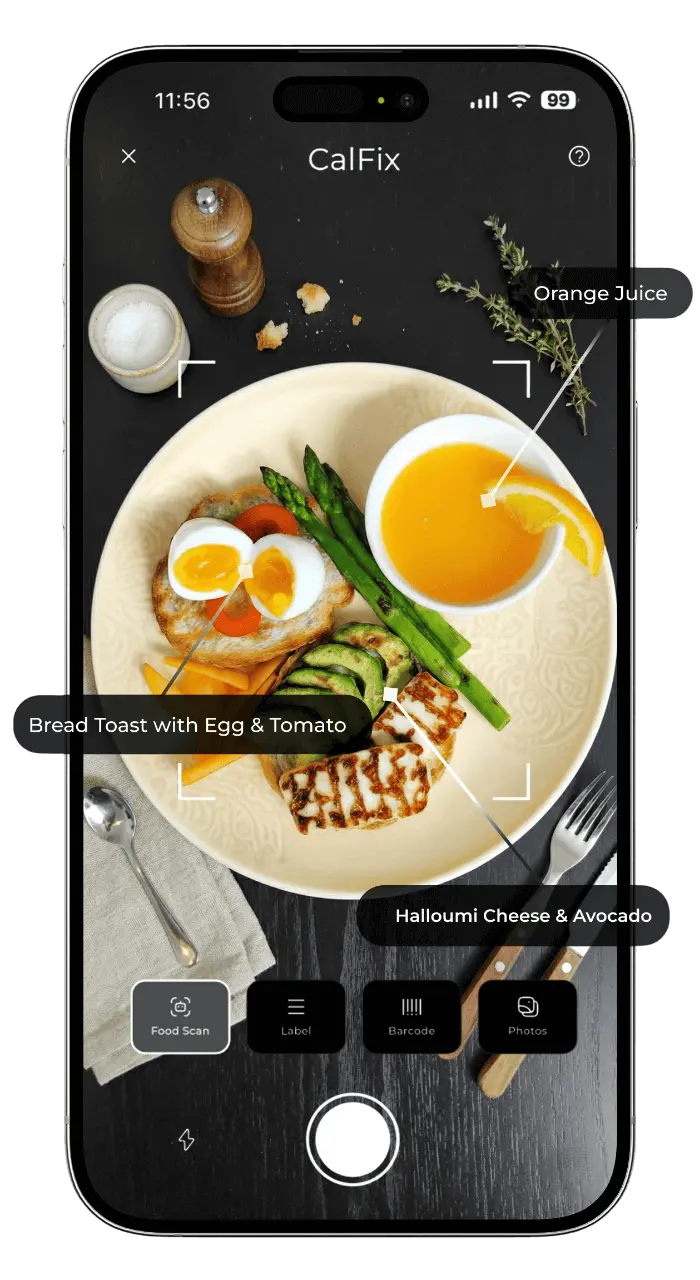
Photo-scan meals, scan barcodes off US packaging, and see your protein and fiber — no subscription, no paywall on core features.
Download CalFix FreeIf You Want to Measure It
You do not need an app to eat this way — the MyPlate proportion and the 5%/20% rule handle most decisions. But if you want to know whether you are actually hitting protein and fiber rather than assuming it, a few weeks of logging is the only way to find out. The usual discovery is not that the food was bad; it is that portions were bigger than assumed and the coffee, the dressing and the handful of chips never got counted.
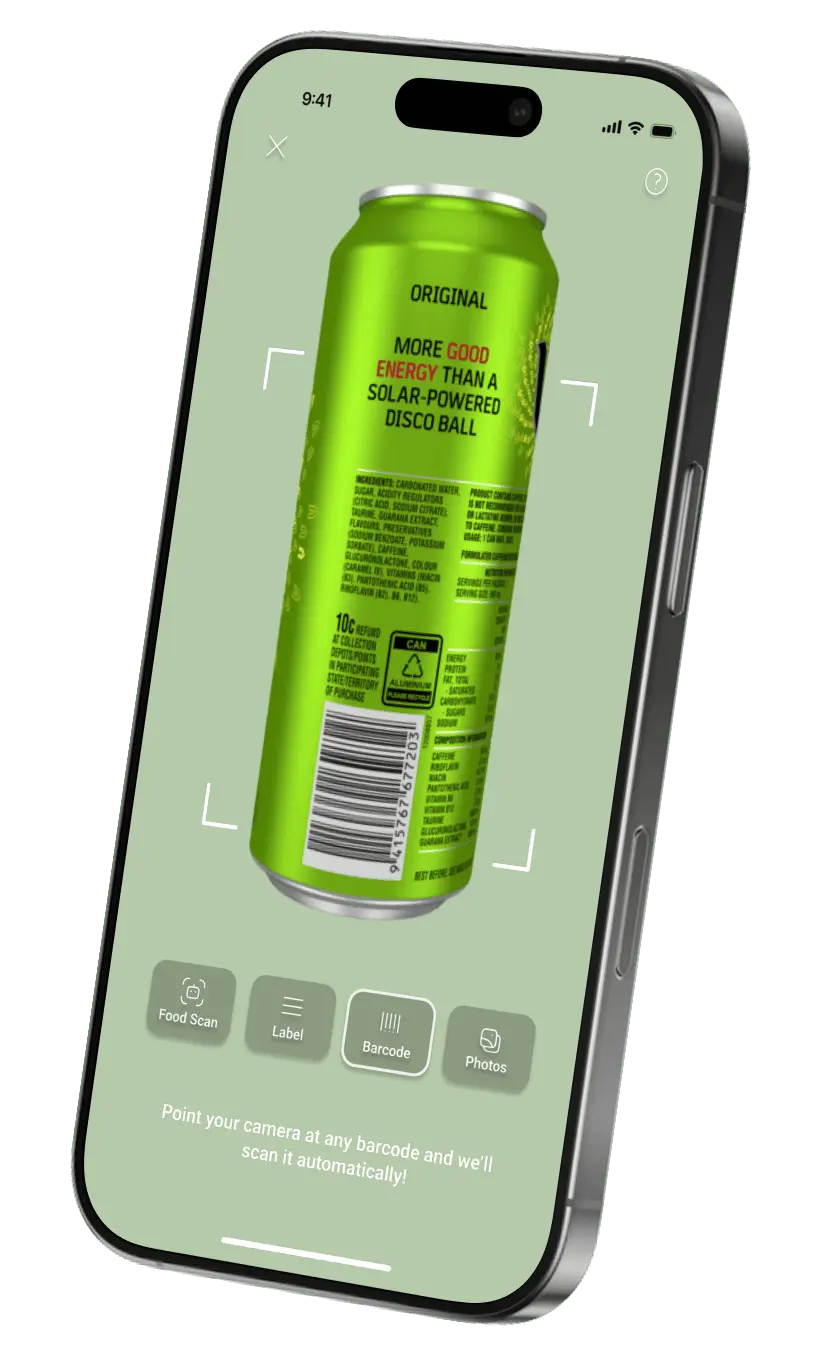
CalFix is a free calorie tracker with no paywall on the core features. You photograph a meal and the AI estimates the food and the portion, at approximately 98% accuracy on common foods. The barcode scanner reads packaged goods, which is the fast path for anything with a US Nutrition Facts panel on the back. Macro tracking, meal plans and weight tracking are all included, and no subscription is required. It runs on iOS and Android in 19 languages.
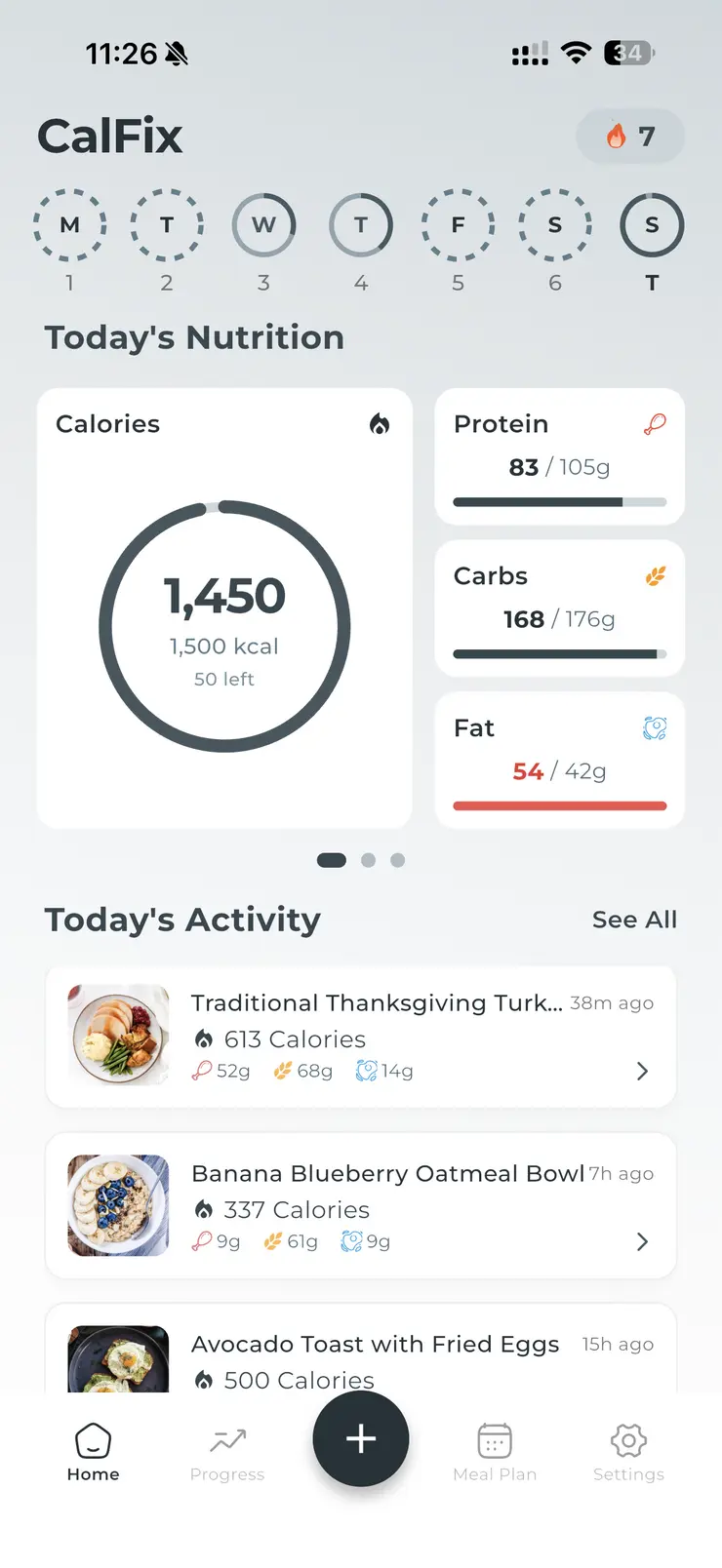
A reasonable way to use it: log honestly for two or three weeks without changing anything, see where protein and fiber land, then fix one meal. Breakfast is usually easiest — swapping a flavored yogurt cup or a drive-thru sandwich for plain Greek yogurt with frozen berries adds protein and fiber, cuts added sugar, and takes no extra time. Use measuring cups and a scale for the first couple of weeks only, until your eye is calibrated on what a cup of rice and 3 ounces of chicken look like. And log the drinks: the latte, the soda, the beer. If you only ever log one category accurately, make it that one.
If you are comparing tools, we have written up the free AI calorie trackers worth using in 2026 and which trackers work without a subscription. For versions of this list built on other countries' guidance, see best foods for weight loss in Canada and best foods for weight loss in the UK.
The One-Paragraph Summary
Half the plate fruits and vegetables, as MyPlate asks. Lean on Greek yogurt, cottage cheese, rotisserie chicken, canned tuna and salmon, eggs and beans for protein. Lean on frozen produce, oats, popcorn and whatever is cheap in the produce section for volume and fiber. Read the serving size and the 5%/20% rule on the label. When you eat out, order the smaller size, read the posted calorie number, and box half of it before you start. Everything else is detail.
Frequently Asked Questions
What are the best foods for weight loss?
The best foods for weight loss are the ones carrying the most protein or fiber per calorie, and in an American supermarket that means plain nonfat Greek yogurt, low-fat cottage cheese, rotisserie chicken breast, canned tuna and canned salmon, eggs and carton egg whites, black beans and lentils, rolled oats, frozen berries and frozen vegetables, and peanut butter powder. Using USDA FoodData Central values, 1 cup (227 g) of plain nonfat Greek yogurt is about 138 calories with 23 g of protein, and 1 cup (172 g) of cooked black beans is about 227 calories with 15 g of protein and 15 g of fiber. No food burns fat. These simply make a calorie deficit easier to hold.
How do MyPlate and the Dietary Guidelines help with weight loss?
MyPlate is the USDA's visual translation of the Dietary Guidelines for Americans, and it asks you to make half your plate fruits and vegetables, make half your grains whole grains, vary your protein, and move to low-fat or fat-free dairy. Fruits and vegetables are the least calorie-dense things on the table, so giving them half the surface area caps how much room is left for everything else without counting anything. Neither MyPlate nor the Dietary Guidelines is a weight-loss diet, but the plate proportion is the one rule that still works at a potluck, a buffet, or someone else's dinner table.
Is Greek yogurt or cottage cheese better for weight loss?
They are close, and the tiebreaker is sodium. Per USDA FoodData Central, 1 cup (227 g) of plain nonfat Greek yogurt is roughly 138 calories with 23 g of protein and only about 82 mg of sodium. One cup (226 g) of 1% low-fat cottage cheese is roughly 163 calories with 28 g of protein but around 920 mg of sodium. Cottage cheese wins on protein per calorie; Greek yogurt wins on sodium. If you eat one of them daily and watch your salt intake, look for the no-salt-added cottage cheese, which is about 13 mg of sodium per 100 g instead of 406 mg.
Can I eat fast food and still lose weight?
Yes. Weight change follows your calorie balance across the week, not any single meal. Chains with 20 or more locations are required by the FDA menu labeling rule to post calories on the menu board, so the number is usually right in front of you. Using USDA survey-food values, a quarter-pound-style cheeseburger with medium fries lands near 960 calories, while a single-patty cheeseburger with a small fries is near 580 — about 380 calories saved without leaving the restaurant. The two biggest levers are almost always portion size and the drink.
Do I need to pay for an app to count calories in the US?
No. CalFix is 100% free with no paywall for core features. AI photo scanning, a barcode scanner for packaged food, macro tracking, meal plans and weight tracking are all included, and no subscription is required. The AI is approximately 98% accurate on common foods, and you can correct any estimate by hand when a portion looks off. The app is available on iOS and Android in 19 languages.