Best Foods for Weight Loss in Canada (2026)
Canada has its own official plate, its own food-composition database, and its own winter. This is a weight-loss food list built on all three — with real numbers from the Canadian Nutrient File, not guesses.
The best foods for weight loss in Canada are the ones carrying the most protein or fibre per calorie: lentils, black beans and chickpeas; canned wild salmon; plain Greek-style and Balkan-style yogourt; cottage cheese; eggs; firm tofu; oats and pearled barley; and cheap high-volume vegetables and fruit like cabbage, carrots, rutabaga and frozen wild blueberries.
Arrange them using Canada's Food Guide plate — half vegetables and fruits, a quarter protein foods, a quarter whole grains — and most of the calorie work is already done before you count anything.
Every number in this article comes from the Canadian Nutrient File, Health Canada's official food-composition database, converted to the metric household measures Canadians actually use (125 mL, 175 mL, 250 mL). Where a food is served by weight rather than volume, the Food Guide serving of 75 g is used.
Start With the Plate, Not the Number
In 2019 Health Canada threw out the rainbow and the serving counts and replaced them with a picture of a plate. Canada's Food Guide now asks for three proportions:
- Half the plate: vegetables and fruits
- One quarter: protein foods
- One quarter: whole grain foods
This matters more for weight loss than it looks. Vegetables and fruits are, with very few exceptions, the least energy-dense things on the table. Giving them half the surface area caps how much room is left for the dense stuff — without a scale, an app, or a decision. A plate assembled that way at a potluck in Thunder Bay lands in roughly the same calorie range as one assembled at home, which is not true of any counting method.
The Food Guide is deliberately not a diet. It says nothing about calories, and Health Canada has never positioned it as a weight-loss tool. But if you want one rule that survives restaurants, holidays and other people's cooking, the plate is the best one Canada has.
Protein Foods That Do the Most Work Per Calorie
The quarter of the plate reserved for protein foods is where the biggest wins are. Protein is the most satiating macronutrient at a given calorie level, and it is the macro most people under-eat when they cut portions. Here is what a realistic Canadian portion actually delivers.
| Protein food | Portion | Energy | Protein | Worth noting |
|---|---|---|---|---|
| Greek-style yogourt, plain, 0–0.5% M.F. | 175 mL (177 g) | 103 kcal | 18.6 g | Most protein per calorie in the dairy case |
| Canned sockeye salmon, drained | 75 g | 119 kcal | 19.7 g | 644 IU vitamin D |
| Canned pink salmon, with bone | 75 g | 104 kcal | 17.3 g | 212 mg calcium from the soft bones |
| Atlantic salmon, wild, baked | 75 g | 137 kcal | 19.1 g | 245 IU vitamin D |
| Cod, Atlantic, baked | 75 g | 79 kcal | 17.1 g | Most protein per calorie on this table; under 1 g fat |
| Cottage cheese, 1% M.F. | 125 mL (119 g) | 86 kcal | 14.8 g | 485 mg sodium — the catch |
| Lentils, boiled | 175 mL (146 g) | 170 kcal | 13.2 g | 6.2 g fibre |
| Eggs, hard-cooked | 2 large (100 g) | 141 kcal | 11.8 g | 58 IU vitamin D |
| Black beans, boiled | 175 mL (127 g) | 168 kcal | 11.3 g | 8.9 g fibre — highest on this list |
| Chickpeas, boiled | 175 mL (121 g) | 199 kcal | 10.7 g | 5.5 g fibre |
| Tofu, firm | 100 mL (107 g) | 75 kcal | 8.7 g | 214 mg calcium |
Values per Canadian Nutrient File, converted using the CNF's own metric measure factors. Vitamin D is shown in IU because that is how supplement labels in Canada are still written; 40 IU = 1 µg.
Two things stand out. Plain fat-free Greek-style yogourt is the single most protein-dense item you can buy in a Canadian dairy aisle without going near a powder. And canned salmon quietly beats almost everything else on the list for vitamin D, which becomes a genuinely Canadian problem five months a year.
Lentils, because Canada grows them
Canada is the world's leading producer and exporter of lentils, with Saskatchewan accounting for roughly 95% of the national crop, according to Lentils.org. That shows up on the shelf: a bag of dried red split lentils is one of the cheapest sources of protein and fibre in any Canadian grocery store, and it does not need soaking.
Practically: red lentils dissolve into soups and stews in about 15 minutes, which makes them the easiest way to add 10–13 g of protein and 5–6 g of fibre to a pot without adding much else. Green and French lentils hold their shape and work cold in salads. Canned lentils and beans are fine too — rinsing drained canned pulses under the tap knocks a meaningful share of the added sodium off.
The Volume Half: Vegetables, Fruit and Whole Grains
The other 75% of the plate is where most people either lose the plot or win easily. The trick is knowing which vegetables give you a full-looking plate for almost nothing, and which ones (parsnip, potato, corn) behave more like a grain.
| Food | Portion | Energy | Fibre |
|---|---|---|---|
| Kale, boiled, chopped | 250 mL (137 g) | 38 kcal | 2.7 g |
| Rutabaga, boiled, cubed | 250 mL (180 g) | 54 kcal | 3.2 g |
| Broccoli, boiled, chopped | 250 mL (165 g) | 58 kcal | 4.0 g |
| Carrot, boiled, sliced | 250 mL (165 g) | 58 kcal | 4.5 g |
| Brussels sprouts, boiled | 250 mL (165 g) | 59 kcal | 5.9 g |
| Wild blueberries, frozen | 250 mL (148 g) | 84 kcal | 6.5 g |
| Butternut squash, baked, cubed | 250 mL (217 g) | 87 kcal | 3.6 g |
| Apple, raw, with skin | 1 medium (182 g) | 95 kcal | 3.5 g |
| Parsnip, boiled, sliced | 250 mL (165 g) | 117 kcal | 5.3 g |
| Potato, baked, flesh and skin | 1 medium (173 g) | 161 kcal | 3.8 g |
| Barley, pearled, cooked | 250 mL (166 g) | 204 kcal | 4.1 g |
| Oats, large flake, cooked | 250 mL (247 g) | 205 kcal | 4.9 g |
| Quinoa, cooked | 250 mL (195 g) | 235 kcal | 5.5 g |
Frozen wild blueberries deserve a specific mention. Per the CNF they come in at 84 calories for a full 250 mL with 6.5 g of fibre — more fibre than the same volume of cooked oats, and available in every Canadian freezer aisle year-round at a fraction of the price of fresh berries in February.
Note also how close pearled barley and large-flake oats are on energy per 250 mL, and how far both sit from a plain boiled vegetable. That is the entire argument for the Food Guide's quarter-plate limit on grains, in two rows of a table.
Eating for a Canadian Winter
Most weight-loss food lists are written as if the reader lives somewhere with a growing season in January. Canada does not, and the practical consequences are real.
Root vegetables are the winter volume play
From November to April, the cheap, good-quality fresh produce in a Canadian store is overwhelmingly roots and brassicas: carrots, rutabaga, turnip, beets, parsnip, cabbage, onions. Most of these are low-energy and store for weeks in a cold room or crisper. Rutabaga in particular is underrated — 54 calories for 250 mL of cooked cubes, against about 125 for the same volume of baked potato. Mashed with a little butter it stands in convincingly for potato at well under half the calories.
The one to watch is parsnip. It is a root vegetable that behaves like a starch: 117 calories per 250 mL, roughly double carrot. Delicious roasted; just count it toward the grain quarter rather than the vegetable half.
Soups and stews, done properly
A pot of soup is the highest-volume, lowest-effort meal available in a cold climate, and it is easy to make it lower in calories without making it sad. The pattern that works:
- Base: onion, carrot, celery, garlic, sweated in 15 mL of oil rather than 60 mL
- Bulk: cabbage, rutabaga, turnip, kale — cheap, filling, almost free in calorie terms
- Body: red lentils or barley, 175–250 mL dry for a whole pot, not per bowl
- Protein: beans, lentils, or shredded chicken
- Finish: acid — lemon, vinegar — instead of extra cream or extra salt
Cream, butter and the amount of oil in the base are where soup calories actually hide. The vegetables are never the problem.
The vitamin D gap
This is the genuinely Canadian nutrition issue, and it is not really about weight. Osteoporosis Canada states plainly that reduced daylight and skin exposure to sun between October and March make it hard for Canadians to make vitamin D, and recommends getting it from both food and supplements. It cites 600 IU (15 µg) daily for adults 70 and under, and 800 IU (20 µg) for those over 70.
Food helps but rarely closes the gap alone. From the CNF, per 75 g Food Guide serving: canned sockeye salmon supplies about 644 IU, canned pink salmon about 435 IU, baked wild Atlantic salmon about 245 IU. Two hard-cooked eggs supply about 58 IU. Milk and many yogourts in Canada are fortified, which is why the Nutrition Facts table is worth reading. Whether you need a supplement on top is a conversation for your doctor or a registered dietitian, not a blog.
Appetite in the cold
Two honest, non-mysterious things happen to a lot of people between December and March: outdoor activity drops, and hot, dense comfort food becomes more appealing. Neither requires a metabolic explanation, and neither is a character flaw. Both are worth simply noticing. The two highest-yield adjustments are keeping protein intake steady when activity falls, and making the default hot meal a soup or stew built on the pattern above rather than a casserole.
How to Read a Canadian Nutrition Facts Table
Canada's Nutrition Facts table is standardized and, once you know where to look, faster to use than counting anything. Three habits cover most of it.
1. Read the serving size first. Every number underneath is scaled to that amount, not to the package. A 500 mL bottle listing a 250 mL serving is telling you half the story on purpose.
2. Use the % Daily Value column, not the grams. The mandatory footnote on every Canadian Nutrition Facts table — confirmed in the CFIA's nutrition labelling guidance — reads "5% or less is a little, 15% or more is a lot". That single rule lets you scan a shelf: aim for 15% or more on fibre, 5% or less on sodium and saturated fat, without doing arithmetic.
3. Ignore front-of-pack claims and check the table. "Made with whole grains", "source of fibre" and "light" are regulated terms with narrow meanings that rarely match what shoppers assume. The table is the honest part of the package.
What to Actually Put in the Cart
The same list works at Loblaws, No Frills, Sobeys, Metro, Save-On-Foods or a Costco run. Nothing here is specialty.
- Dry goods: red split lentils, green lentils, dried or canned chickpeas and black beans, large-flake oats, pearled barley
- Dairy case: plain Greek-style yogourt (0–2% M.F.), 1% cottage cheese, plain Balkan-style yogourt if you prefer the texture and can fit the extra fat
- Canned aisle: canned wild sockeye or pink salmon, canned tomatoes, low-sodium broth
- Freezer: frozen wild blueberries, frozen kale or spinach, frozen mixed vegetables, frozen fish fillets
- Produce: whatever roots and brassicas are cheapest that week — cabbage, carrots, rutabaga, onions — plus apples and bagged greens
- Protein counter: eggs, firm tofu, whole chicken, and pork tenderloin when it is on sale
Note that Balkan-style yogourt is not a mistake on the list. At 4–6% M.F. it runs about 128 calories per 175 mL with 5.7 g protein, against 103 calories and 18.6 g protein for fat-free Greek-style. If the thicker, richer one is the one you will actually eat plain instead of buying a sweetened flavoured cup, it is the better choice. Sustainability beats optimization.
An Honest Note on Weight Loss
Weight loss happens when energy intake is lower than energy expenditure over time. Food choice does not override that, but it changes how hard it is to stay there — high-protein, high-fibre, high-volume foods make a given calorie level far more tolerable than the same calories from refined grains and oils.
Every number in this article is a population average from a food-composition database. Real foods vary by variety, growing conditions, cooking method and how much oil ended up in the pan. Individual energy needs vary widely with body size, age, activity and medical history. If you are pregnant, managing diabetes, kidney disease, an eating disorder, or taking medication that affects appetite or metabolism, talk to your doctor or a registered dietitian before making significant changes. Nothing here is medical advice.
Track What You Eat, Free
Photo-scan meals, read barcodes off Canadian packaging, and see your protein and fibre without a subscription.
Download CalFix FreeIf You Want to Measure It
You do not need an app to eat this way. The plate rule and the 5%/15% rule between them handle most decisions. But if you want to know whether you are actually hitting protein and fibre rather than assuming it, a few weeks of logging is the only way to find out — and most people are surprised in both directions.
CalFix is a free calorie tracker that does this without a paywall on the core features. You photograph a meal and the AI estimates the food and the portion, at approximately 98% accuracy on common foods. The barcode scanner reads packaged goods, which is the fast path for anything with a Canadian Nutrition Facts table on the back. Macro tracking, meal plans and weight tracking are included, and there is no subscription required. The app runs in 19 languages, including English and French.
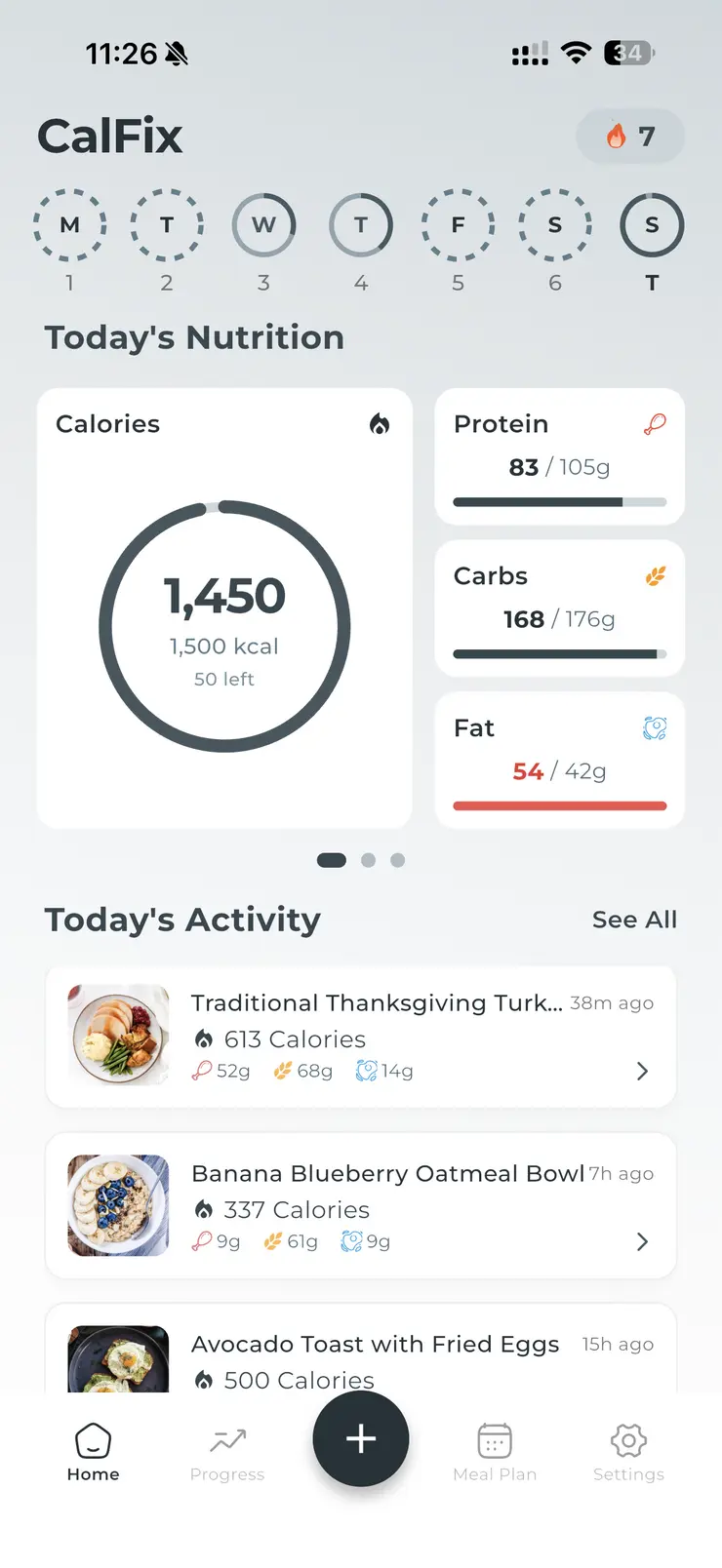
A reasonable way to use it: log honestly for two or three weeks without changing anything, look at where protein and fibre actually land, then adjust one meal. Breakfast is usually the easiest to fix — swapping a sweetened flavoured yogourt cup for plain Greek-style with frozen wild blueberries typically adds protein and fibre while cutting sugar, and takes no extra time.
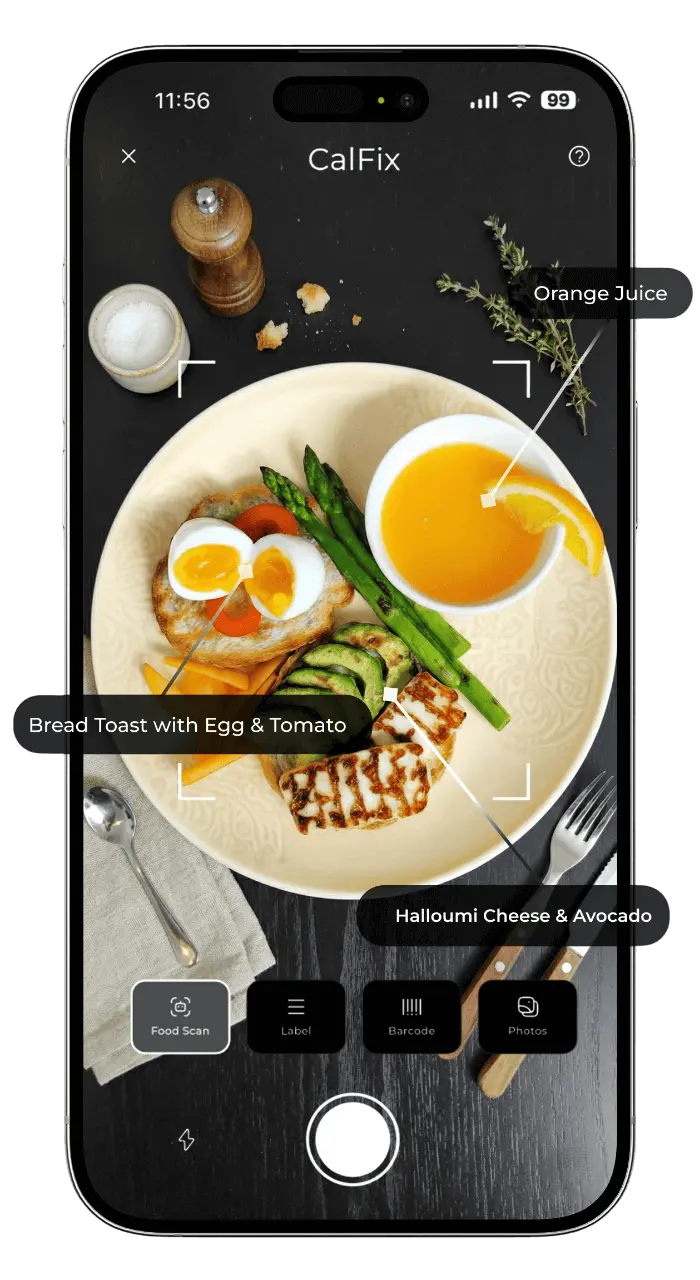
If you are comparing options, we have written up the free AI calorie trackers worth using in 2026 and which trackers work without a subscription. For a UK-focused version of this food list built on the Eatwell Guide instead, see best foods for weight loss in the UK, or the American version built on MyPlate and USDA FoodData Central: best foods for weight loss in the USA.
The One-Paragraph Summary
Half the plate vegetables and fruits, a quarter protein foods, a quarter whole grains. Lean on lentils, canned wild salmon, plain Greek-style yogourt, cottage cheese, eggs and tofu for the protein quarter. Lean on cabbage, carrots, rutabaga, kale and frozen wild blueberries for volume, especially in winter. Read the % Daily Value column and use the 5%/15% rule. Get your vitamin D sorted between October and March. Everything else is detail.
Frequently Asked Questions
What are the best foods for weight loss in Canada?
The most useful foods are the ones that deliver a lot of protein or fibre for their energy content. Using Canadian Nutrient File data, 175 mL of boiled lentils gives about 170 calories with 13.2 g protein and 6.2 g fibre, 175 mL of plain fat-free Greek-style yogourt gives about 103 calories with 18.6 g protein, and a 75 g serving of canned sockeye salmon gives about 119 calories with 19.7 g protein. Build meals around foods like those, fill half the plate with vegetables and fruits as Canada's Food Guide suggests, and the calorie total usually takes care of itself.
How does Canada's Food Guide help with weight loss?
Canada's Food Guide replaced serving counts with a plate: half vegetables and fruits, one quarter protein foods, one quarter whole grain foods. Vegetables and fruits are the least energy-dense part of most meals, so a plate built in those proportions is usually lower in calories than the same plate built around grains and meat, without anyone counting anything. It is a proportion rule rather than a calorie rule, which is why it still works when you are eating out or at someone else's table.
Are lentils good for weight loss?
Yes, for most people. Canadian Nutrient File data puts 175 mL of boiled lentils at roughly 170 calories with 13.2 g protein and 6.2 g fibre, which is an unusually good ratio for the price. Canada is also the world's leading producer and exporter of lentils, so dried red and green lentils are among the cheapest protein sources on the shelf in any Canadian grocery store.
Do Canadians need a vitamin D supplement in winter?
Osteoporosis Canada notes that reduced daylight and skin exposure to sun between October and March make it hard for Canadians to make vitamin D, and recommends getting it from both food and supplements. It cites 600 IU (15 µg) daily for adults 70 and under and 800 IU (20 µg) daily for those over 70. Canned salmon is one of the strongest food sources: 75 g of canned sockeye supplies roughly 644 IU. Talk to your doctor or a registered dietitian before starting a supplement.
How do I use the % Daily Value on a Canadian Nutrition Facts table?
Look at the % Daily Value column rather than the gram amounts. The footnote on every Canadian Nutrition Facts table says 5% or less is a little, 15% or more is a lot. Use that to aim high on fibre and low on sodium and saturated fat. Check the serving size at the top of the table first, because every number below it is scaled to that amount, not to the whole package.