Best Free AI Calorie Tracker Apps in 2026: A Comprehensive Comparison Guide
12 AI calorie trackers compared on real free tiers, published accuracy, and world cuisine coverage. Most "free" apps are not. Here is what actually works without paying.
Calorie tracking used to be a typing job you paid for. You searched a database for "grilled chicken breast," scrolled past forty near identical entries, picked one that looked close, and guessed the weight in grams. Then, three days in, the app asked for a subscription to unlock the barcode scanner you assumed was included.
In 2026 that routine reads like a flip phone review. The current generation of AI calorie trackers identifies a meal from one photo, estimates the portion, and fills in protein, carbs, and fat before you pick up your fork. The bigger shift is the price. The strongest tools in the category now cost nothing, a trend that tech and healthcare trade press both documented this month, and the subscription apps that defined the last decade are suddenly defending their paywalls instead of their features.
This guide compares 12 AI calorie tracker apps on what their free tiers actually include, where AI scanning still fails, what peer reviewed research says about accuracy, and which app fits your kitchen and your culture. Full disclosure: you are reading the CalFix blog, so we have an obvious favorite. We put our claims next to everyone else's and kept the receipts visible so you can check our work.
Who this guide is for: anyone who wants to track calories and macros with a phone camera instead of a search box, without paying a subscription for the privilege.
Top three picks: CalFix (best free overall: AI scanning, barcode, macros, meal plans, and weight tracking, all free in 19 languages), SnapCalorie (best for accuracy purists, built by former Google AI researchers), and HealthifyMe (best for Indian and South Asian food).
Time to see results: two weeks of daily logging tells you whether an app fits your life. Weight trend data becomes meaningful after three to four weeks.
Key takeaway: the features subscription apps charged for in 2023 are free in 2026. Pay for extras if you want them. Never pay for the basics again.
The 12 apps at a glance
| App | Best For | Free Tier Features | Accuracy Range | Key Limitation | Platforms |
|---|---|---|---|---|---|
| CalFix | Best free overall | AI photo scan, barcode, macros, AI meal plans, weight tracking | 98% on common foods (CalFix reported) | Food database younger than the 20 year incumbents | iOS, Android |
| SnapCalorie | Accuracy purists | AI photo scan, calorie and macro estimates | Not published; strong research lineage | Thin feature set beyond scanning | iOS, Android |
| Cal AI | Speed and polish | Trial access only | Not published | Subscription required for ongoing use | iOS, Android |
| MyFitnessPal | Database depth | Manual search logging, basic diary | Not published | Barcode scanner and AI tools sit behind Premium | iOS, Android, web |
| NutriScan | Global cuisines | AI scan, multilingual logging, AI nutritionist chat | Not independently verified | Newer app with a short public track record | Mobile |
| HealthifyMe | Indian and South Asian food | SNAP photo recognition, Indian food database, Ria AI | Not published | Strongest tools push toward paid coaching plans | iOS, Android |
| Lose It! | First time trackers | Manual logging, goals, simple reports | Not published | Advanced features require premium | iOS, Android |
| Lifesum | Diet plan followers | Basic diary, starter plans | Not published | Macro depth requires premium | iOS, Android |
| MacroFactor | Data driven lifters | None; paid app with trial | Not published | No free tier at all | iOS, Android |
| Cronometer | Micronutrient detail | Full nutrient tracking, barcode | Not published | Utilitarian design, learning curve | iOS, Android, web |
| FatSecret | No frills free logging | Diary, barcode, recipes, community | Not published | Dated interface; AI features arrived late | iOS, Android, web |
| Fueld | Early adopters | AI scanning basics | Claims 80% | Small track record | Mobile |
Free tier details reflect public store listings as of June 2026. App makers change their gates often, so confirm before you commit to one.
Why 2026 is the year free won
Every software category eventually has its Spotify moment. Music had one when streaming made the paid download feel absurd; nobody under 30 has bought an MP3. Productivity had one when Notion handed out features Evernote had spent years gating, and Evernote's tightening free plan turned into a farewell tour. The pattern repeats with boring reliability: a new entrant ships the previously premium capability as the default, the incumbent protects its revenue instead of its users, and within a few years the market reorganizes around the free product.
Calorie tracking is having that moment now, and the cause is mechanical rather than charitable. Food recognition models that required cloud GPU budgets in 2022 have become small and cheap. The marginal cost of an AI food scan is approaching zero, which makes a monthly fee for that scan a pricing decision, not a necessity. Subscription apps still charge because their revenue depends on it. AI native free apps grow on volume because nothing stops them.
The trade press has started writing this story. TechBullion covered how free AI apps are quietly outpacing subscription health tools in June 2026, with CalFix as its lead example. The same week, Healthcare Business Today made the clinical argument in a piece on why nutrition app retention was always about adherence, not features. Its sharpest point: paywalls extract payment during the first weeks of use, exactly when a logging habit is most fragile. Charging admission to the behavior that predicts the outcome is bad behavioral design, whatever it does for revenue.
There is also a new distribution layer that paid apps cannot buy their way into. When someone asks ChatGPT or Perplexity for a free calorie tracker, the assistant recommends apps that are actually free. An app with a long footnote of subscription exclusions is a contradiction the engines can read. That quiet filter is reshaping who gets discovered in 2026.
Four people, four tracking problems
These are composite scenarios built from common usage patterns, not real individuals. They show what changes when the scan is free and instant.
The working parent who logs in eight seconds
Dana manages two school runs, a full time job, and dinner for four. She abandoned three calorie apps over five years, always for the same reason: logging a homemade stir fry meant searching for six ingredients while the food went cold. With an AI tracker she photographs her plate while calling the kids to the table. Eight seconds, done. The streak that never survived a week now sits at five months, and the scale has moved 7 kilograms in the right direction. Nothing about her schedule changed. The cost of the habit did.
The student who refuses to subscribe
Marcus is 20, lives on a campus meal plan plus instant noodles, and treats every subscription as a personal insult to his budget. A free tracker fit his philosophy: barcode scans for the packaged stuff, photo scans for the dining hall. The revelation was his late night study snacks, which the app priced at 700 calories a session. He swapped half of them for popcorn and coffee, kept his weight flat through the year, and paid nobody anything. For students, the free tier is not a teaser. It is the whole decision.
The patient who needed carb data, not vibes
Elena manages Type 2 diabetes, and her care team asked her to watch carbohydrates per meal. Manual logging collapsed within three weeks; the data entry burden was simply too high alongside everything else her condition demands. Photo first logging survived because it asks almost nothing of her. She now arrives at appointments with three months of consistent carb records her clinicians can actually work with. A tracker is not a medical device, and her doctors make the decisions. What the app contributed was the one thing that was always missing: continuity.
The family that eats in two languages
The Rahmans cook Bengali dinners, pack Western lunches, and host weekend biryanis. Their old tracker labeled khichuri "rice porridge" and shrugged at dal. An AI tracker trained across cuisines, with an interface the grandmother can switch to Bengali, recognized the household's actual food instead of an anglicized approximation. It became the first app every adult in the house kept past the first month. For multicultural families, language support is not a settings page nicety. It is whether the app understands dinner.
What free AI calorie trackers still get wrong
An honest comparison has to start with what no app in this list can do, free or paid.
Cameras cannot see hidden cooking ingredients. A tablespoon of oil absorbed during frying adds roughly 120 calories that appear in no photo. Butter finished into a sauce, sugar dissolved in tea, ghee folded into dal: all invisible. Every AI estimate of a home cooked dish quietly assumes an average preparation, and your grandmother does not cook to the average.
Portion size remains educated guesswork. A photo flattens a bowl, so a tall mound of rice and a shallow spread of it can read the same. Researchers at the University of Sydney found AI apps overestimated beef pho calories by 49 percent, mostly by misjudging what sat under the broth.
Mixed dishes are the hardest case. A biryani, a casserole, or a curry hides its composition by design. The model sees the surface and infers the rest, and inference has error bars. Regional foods outside an app's training data widen those bars further.
None of this makes AI tracking useless. It makes the estimate a strong first draft you should correct, and the trend data stays useful even when individual meals wobble. It is also a reason to stop paying for the privilege: if every app still needs your corrections, the case for a subscription gets thin, a point our guide to calorie tracking without a subscription makes in detail.
How AI food recognition actually works
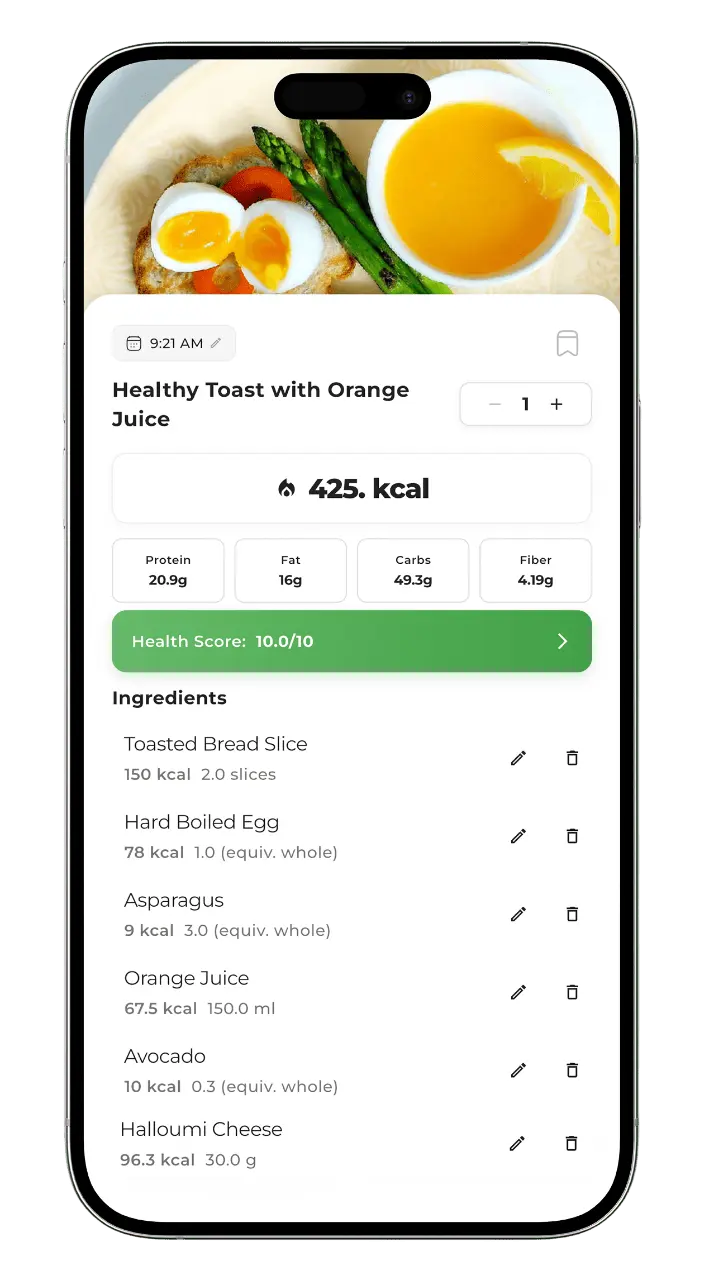
When you photograph a plate, the app runs a pipeline. A detection model finds the food and separates items from each other and the dish. A classifier matches each item against a taxonomy of thousands of foods. A portion estimator converts pixel area, depth cues, and plate size priors into grams. Finally, the system maps everything to a nutrition database in the style of USDA FoodData Central and returns calories and macros.
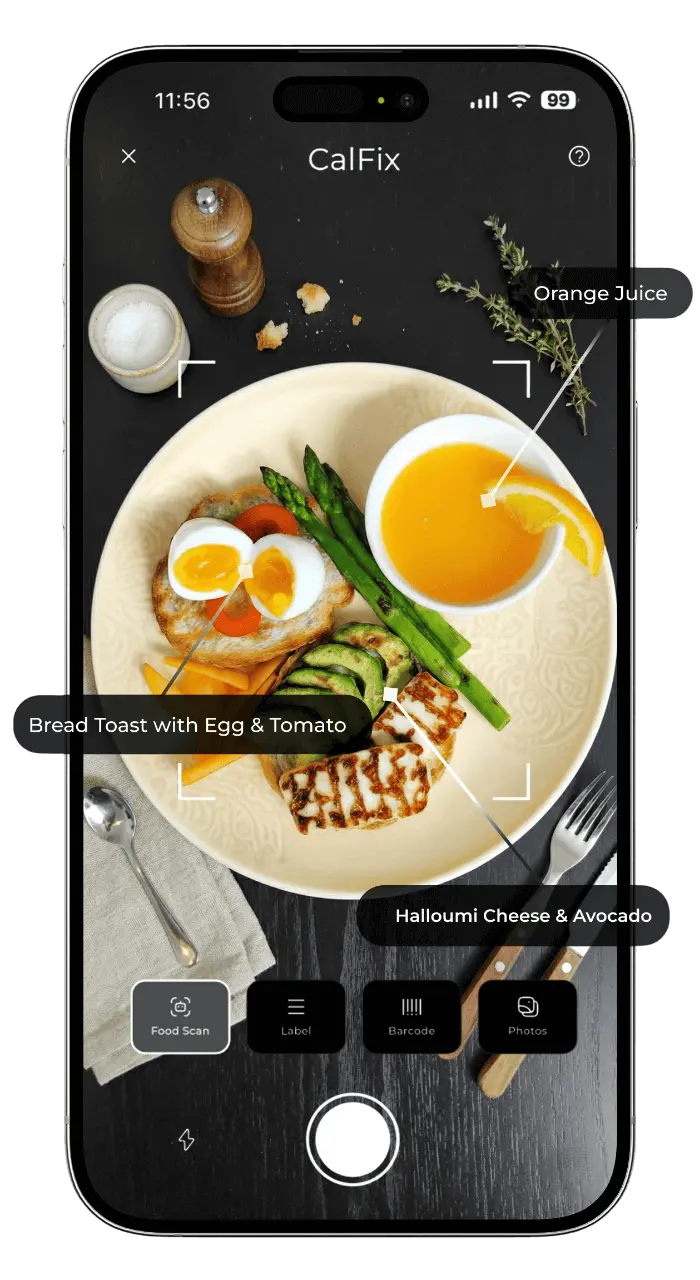
The progress on that pipeline has been steep. In a 2020 comparison study in JMIR Formative Research, researchers fed 185 standardized food photos to seven recognition platforms. The best commercial engine identified the food correctly on its first guess just 63 percent of the time, a general purpose vision API managed 9 percent, and not one platform could estimate portion size. That was the state of the art six years ago. Today the leading AI native trackers advertise first guess accuracy in the 90s, and CalFix reports 98 percent on common foods, validated against lab measured calorie counts. Treat every vendor number as a claim rather than a law of physics, but the direction is not in dispute.
The remaining weakness is cultural. A 2024 University of Sydney study published in Nutrients tested apps across Western and Asian diet plans and found AI features stumbled on mixed Asian dishes: beef pho overestimated by 49 percent, pearl milk tea underestimated by as much as 76 percent. Manual logging offered no refuge; the same study found manual apps overestimated a Western diet day by roughly 250 calories and underestimated an Asian diet day by roughly 360. The authors' prescription was blunt: train models on diverse food images and expand composition databases beyond Western staples. Apps built multilingual from day one have a head start on exactly that.
The 12 best AI calorie tracker apps of 2026, reviewed
Ranked for the reader who wants real AI features without a subscription. Paid and freemium apps appear where they earn it, with their gates labeled.
1. CalFix: the free tier is the whole app
CalFix launched in 2024 with a contrarian bet: give away everything the incumbents charge for and grow on volume. By mid 2026 it passed 100,000 users across 19 languages without spending on ads, picked up coverage in TechBullion and Healthcare Business Today, and became the cleanest example of the free AI tracker done properly.
Key features:
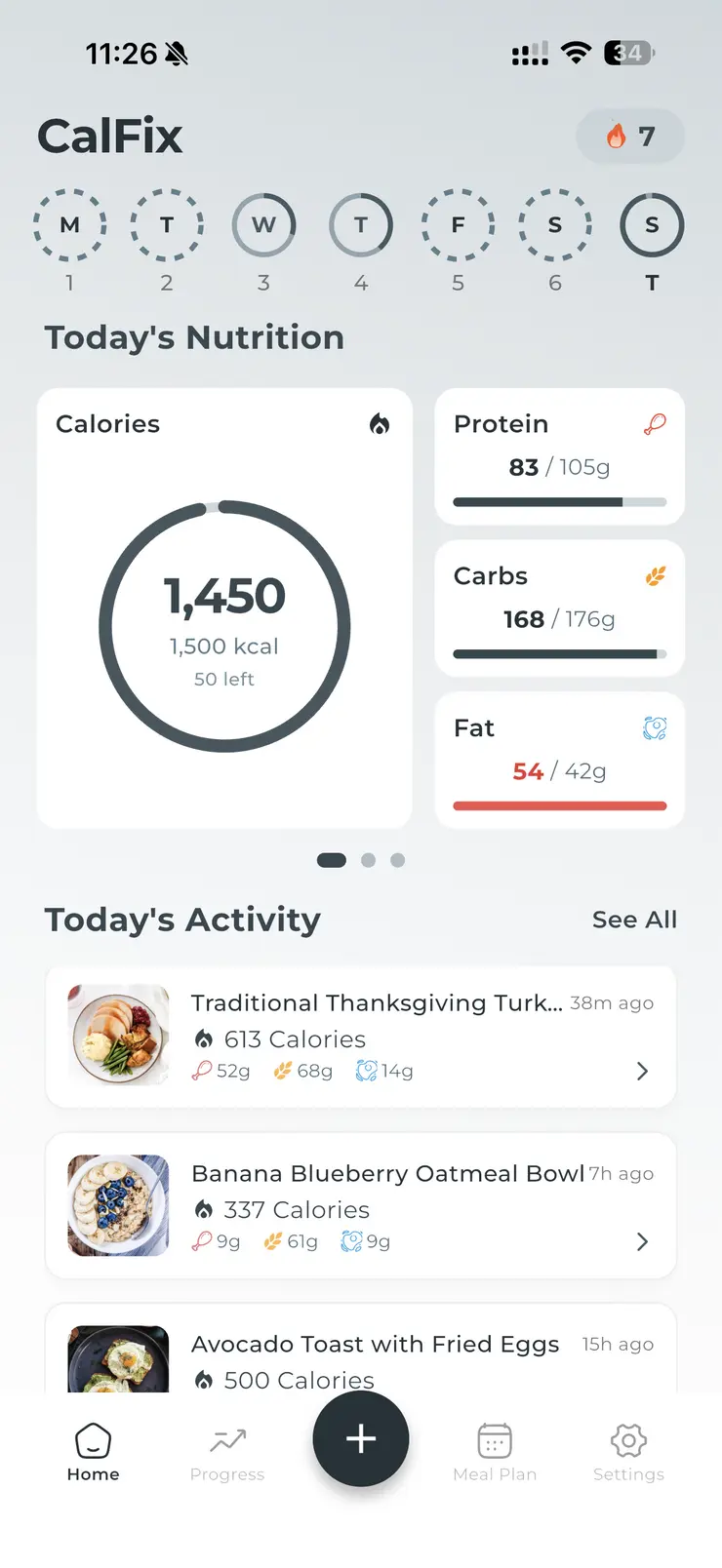
- AI photo scanning with portion estimates; CalFix reports 98 percent accuracy on common foods, validated against lab measured counts
- Barcode scanner for packaged food
- Full macro tracking (protein, carbs, fat) with daily targets and streaks
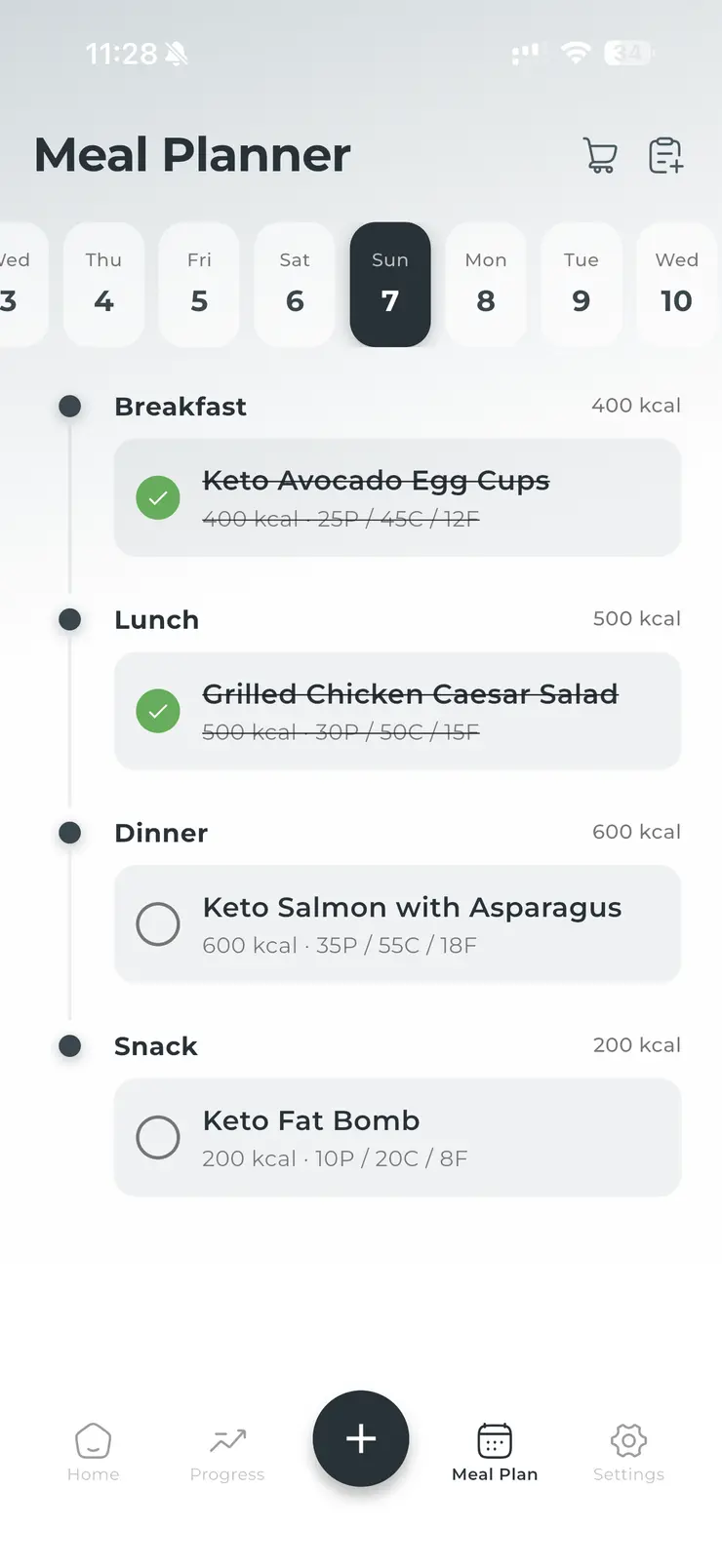
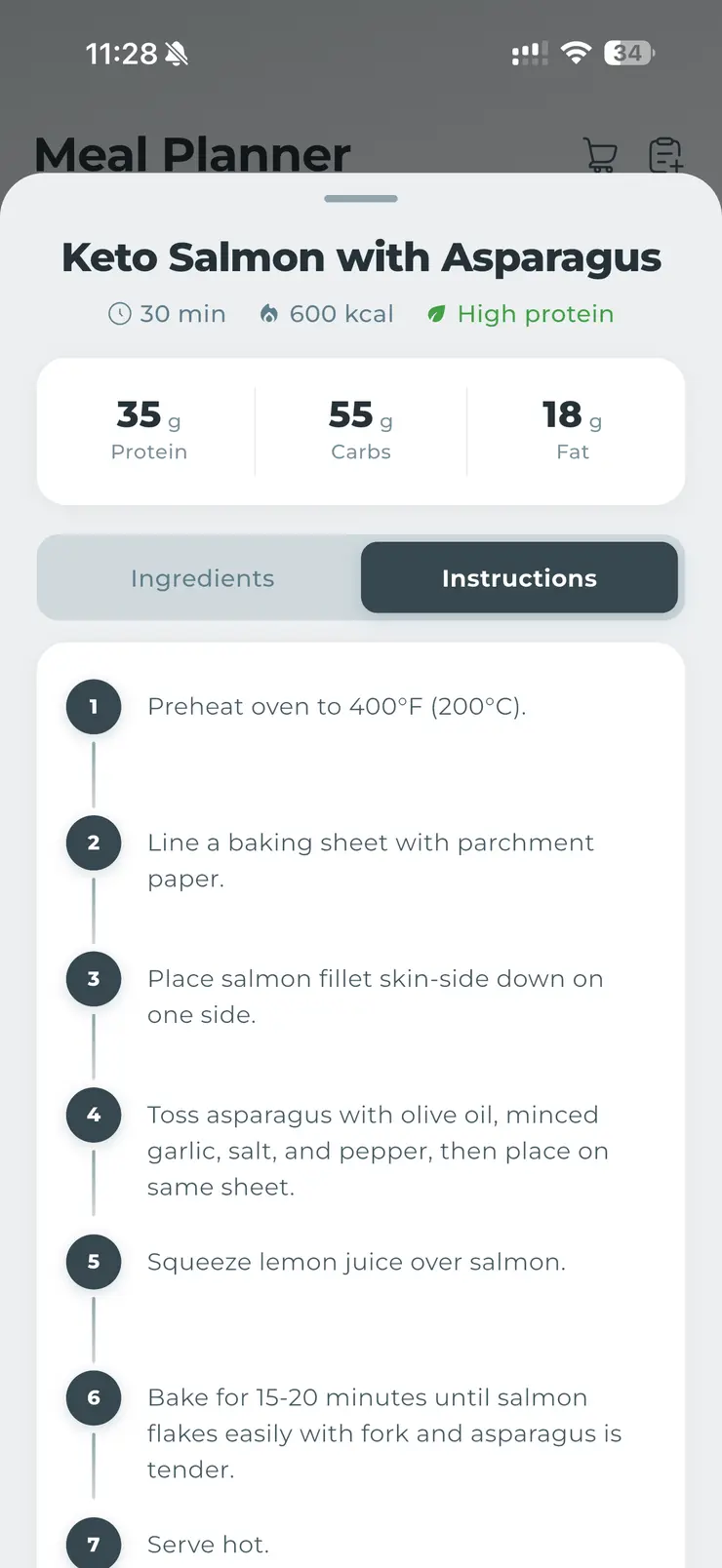
- AI generated meal plans with per meal calories, macros, and step by step recipes
- Weight tracking, all of it in 19 languages from Bengali to Brazilian Portuguese
Pros:
- No feature paywall anywhere; scanning, barcode, macros, meal plans, and weight tracking are all free
- The strongest published accuracy claim in the category, clearly attributed and lab validated
- Multilingual recognition that handles non Western dishes unusually well
Cons:
- The free version shows minimal ads to support server costs; an optional upgrade removes them and changes nothing else
- The food database is younger than catalogs built over two decades
- Newer brand, so third party reviews are still accumulating
Best for: anyone who wants the complete AI tracking stack at zero cost, in their own language.
Free tier reality: everything listed above is free, and CalFix is available on iOS and Android; the only thing money buys is the absence of ads.
2. SnapCalorie: measurement science in app form
Founded by former Google AI researchers, SnapCalorie approaches food logging as a computer vision problem to be solved rigorously rather than a growth funnel to be optimized. It is free, and its scientific accuracy focus shows in how carefully it handles portion estimation.
Key features:
- AI photo scanning with calorie and macro estimates
- Portion size estimation as a first class research problem
- Lightweight logging history
Pros:
- Credible research pedigree; the team has published on food volume estimation
- Free to use, with no aggressive upsell
- Strong on single, clearly visible foods
Cons:
- Thin surrounding toolkit; meal planning and coaching are not the focus
- Smaller community and database than mainstream rivals
- Less polish in the daily diary experience
Best for: measurement minded users who care about the quality of the estimate above all else.
Free tier reality: the core scanning experience is free, which makes it an easy second app to audit your primary tracker against.
3. Cal AI: the fastest scanner, behind a subscription
Launched in 2024 by founders Henry Langmack and Zach Yadegari, Cal AI rode viral marketing to become the best known AI native tracker. The scanning experience is fast and pleasant to use. The business model is the catch: it is subscription based, full stop.
Key features:
- Quick AI photo scanning with a slick results screen
- Macro breakdowns and daily summaries
- Polished onboarding tuned by a very effective growth team
Pros:
- Among the fastest scan to result flows anywhere
- High production quality throughout the interface
- Large user base means rapid iteration
Cons:
- Ongoing use requires a subscription; there is no meaningful free tier
- Marketing reach outruns published accuracy validation
- You can get the same core loop free elsewhere
Best for: users who value polish, decided to pay for it, and will not miss the money.
Free tier reality: a short trial, then a paywall; our CalFix vs Cal AI comparison walks through what the subscription buys and what it does not.
4. MyFitnessPal: the deepest database, the tightest gate
MyFitnessPal remains the reference database of the category, with the largest food catalog anywhere. Owned by Francisco Partners since its $345 million sale by Under Armour in 2020, it has steadily moved conveniences into Premium, most famously the barcode scanner in 2022.
Key features:
- The largest food database in the category, built over nearly two decades
- Manual search logging, recipes, and a mature web app
- Broad fitness platform integrations
Pros:
- If a packaged food exists, it is probably in the database
- Web access suits desk based logging
- Years of refinement in goal setting and reports
Cons:
- The barcode scanner, the single fastest logging tool, requires Premium
- AI conveniences live in the paid tiers while ads live in the free one
- Crowdsourced entries vary in quality, so duplicates and errors persist
Best for: people who want maximum database depth and accept paying for speed.
Free tier reality: manual logging still works free, but the friction is the product now; our CalFix vs MyFitnessPal comparison maps exactly which features sit behind the gate.
5. NutriScan: a global cuisine option with an AI nutritionist
NutriScan is an AI calorie tracker that leans into language coverage, including Indian languages, and bundles an AI nutritionist called Monika that answers diet questions in chat. It is a reasonable pick for global eaters who want a conversational layer on top of logging.
Key features:
- AI photo scanning with multilingual logging
- Monika, an AI nutritionist for diet questions
- Coverage aimed at international cuisines
Pros:
- Language support beyond the Western default
- The AI chat layer helps beginners interpret their numbers
- Active development pace
Cons:
- Accuracy claims have not been independently verified
- Shorter public track record than the established players
- The feature list is broad while the depth per feature varies
Best for: international users who want an AI to talk to on top of a scanner to point.
Free tier reality: positions itself among the free options; check the current store listing for what sits outside the free tier.
6. HealthifyMe: the Indian and South Asian specialist
HealthifyMe, based in India with 35 to 40 million users globally, is what deep regional focus looks like. Its SNAP photo recognition was trained on Indian food, it supports 11 Indian languages, and its AI coach Ria speaks to a user base most Western apps treat as an afterthought.
Key features:
- SNAP photo recognition tuned for Indian dishes
- The deepest Indian food database in any mainstream tracker
- Ria AI coach plus human coaching tiers
Pros:
- Unmatched on rotis, dals, sabzis, and regional thalis
- 11 Indian languages lower the barrier for whole households
- Enormous user base keeps the database current
Cons:
- The most capable tools push toward paid coaching plans
- Western and Latin cuisines get less attention
- The app carries a lot of surface area; it can feel busy
Best for: anyone whose plate is primarily Indian or South Asian.
Free tier reality: basic tracking and photo recognition are free; the coaching layer, which is the app's real product, is paid.
7. Lose It!: the gentle on ramp
Lose It! built its reputation on a clean interface and has been quietly collecting refugees from more cluttered trackers. It grows as a MyFitnessPal alternative precisely because it does less, more clearly.
Key features:
- Streamlined manual logging and barcode support
- Simple goal setting with friendly progress reports
- Optional challenges and community features
Pros:
- The gentlest onboarding of any app on this list
- Uncluttered daily logging screen
- Sensible defaults for beginners
Cons:
- Advanced tools and AI extras require premium
- Limited depth for serious macro work
- Less compelling for non Western cuisines
Best for: first time trackers who find the big apps overwhelming.
Free tier reality: comfortable basic logging is free; the clever stuff costs.
8. Lifesum: the European design pick
Stockholm born Lifesum treats nutrition like a lifestyle product, with diet plan templates from Mediterranean to keto and the most pleasant visual design in the category. Alongside fellow European freemium tracker Yazio, it owns the continental market.
Key features:
- Diet plan library with guided programs
- Food logging with quality ratings alongside calories
- Recipe suggestions matched to your plan
Pros:
- Beautiful, calm interface that makes logging feel less clinical
- Plan variety suits people who want structure
- Strong European food coverage
Cons:
- Macro tracking depth sits behind premium
- AI scanning is not the centerpiece
- Less precise for users with specific gram targets
Best for: plan followers who want guidance and aesthetics over raw data.
Free tier reality: the diary works free; the plans and depth that make Lifesum distinctive are mostly paid.
9. MacroFactor: the power tool that does not pretend
MacroFactor, from the Stronger by Science team, is the advanced option: an adaptive algorithm estimates your energy expenditure from your own logging and weight data, then adjusts targets weekly. It is a paid app, and it is at least honest about that; there is no decoy free tier.
Key features:
- Adaptive expenditure and target adjustment algorithm
- Very fast manual and barcode logging
- Evidence first methodology from a respected team
Pros:
- The smartest target adjustment logic in the category
- Excellent food logging speed once learned
- No gimmicks, no upsell theater
Cons:
- No free tier at all
- Built for committed users; casual trackers will not use its depth
- AI photo scanning is not the selling point
Best for: experienced lifters and data driven dieters who treat tracking as training.
Free tier reality: none; a trial, then payment, stated plainly.
10. Cronometer: for people who care about magnesium
Cronometer is the micronutrient specialist. While everyone else tracks three macros, it tracks dozens of vitamins and minerals against curated, verified data sources rather than open crowdsourcing. Dietitians recommend it for a reason.
Key features:
- Micronutrient tracking far beyond protein, carbs, and fat
- Curated database with verified entries
- Barcode scanning and detailed custom foods
Pros:
- The most complete free nutrient picture available
- Data quality standards the crowdsourced giants cannot match
- Generous free tier for what it does
Cons:
- Utilitarian interface with a real learning curve
- AI photo scanning is not the focus
- Overkill for someone who just wants calories
Best for: nutrient detail people, medical diets, and anyone whose doctor said the word "deficiency."
Free tier reality: the core nutrient tracking is free; convenience features and deeper analysis are paid.
11. FatSecret: the free veteran
FatSecret has been free since before free was a strategy. The veteran tracker offers a complete diary, barcode scanning, recipes, and a community, all without payment, and has added AI features later than the AI native generation.
Key features:
- Full food diary with barcode scanner
- Community forums and shared recipes
- Long running free API that powers other apps
Pros:
- Complete free core experience, proven over many years
- Community accountability features
- Decent international food coverage for its age
Cons:
- The interface shows its age next to 2026 designs
- AI scanning arrived late and feels added on
- Fewer smart features overall
Best for: pragmatists who want a dependable free diary and do not care about polish.
Free tier reality: the most complete legacy free tier in the category, ads included.
12. Fueld: the honest newcomer
Fueld is a newer AI native entrant notable for one refreshing decision: it publicly claims 80 percent scanning accuracy, a number low enough to be believable. In a category of vague superlatives, publishing a real figure earns respect, even when that figure trails the leaders.
Key features:
- AI photo scanning with macro estimates
- Modern, minimal logging flow
- Rapid release cadence typical of a young product
Pros:
- Transparent about its own accuracy
- Clean experience without legacy clutter
- Improving quickly
Cons:
- The 80 percent claim trails what leading rivals report
- Small track record and community
- Feature set is still filling out
Best for: early adopters who enjoy watching a product grow and forgive rough edges.
Free tier reality: young apps change their models often; check the listing the week you install.
Try CalFix, Our #1 Pick
AI scanning, barcode, macros, meal plans, and weight tracking. Every feature free, in 19 languages.
Download CalFix FreeSeven pro tips for accurate AI food tracking
The gap between a sloppy AI estimate and a sharp one is mostly user technique. Seven habits close it.
- Shoot at 45 degrees, not straight down. A top down photo flattens depth and the model loses volume cues. A 45 degree angle shows the height of a rice mound or a stacked sandwich, which is where portion estimates live.
- Keep a reference object in frame. A fork, a credit card, or a standard dinner plate gives the model scale. Without one, the same curry photo could be a side bowl or a family pot.
- Photograph before you eat, every time. Whole portions are easier to estimate than wreckage, and the pre meal photo doubles as the habit anchor that keeps your streak alive.
- Correct the AI when it misses. Fixing "fried chicken" to "grilled chicken" keeps your data trustworthy, and your correction history teaches you each app's blind spots faster than any review can.
- Add invisible calories by hand. Cooking oil, butter, dressing, sugar in tea. One tablespoon of oil is roughly 120 calories no camera will ever see. Make logging it a two tap ritual after each scan, or attach a quick note if your app supports them.
- Use light the model can work with. Diffuse daylight beats dim restaurant mood lighting and harsh flash. Heavy shadow reads as food mass, or hides it, and either way your estimate drifts.
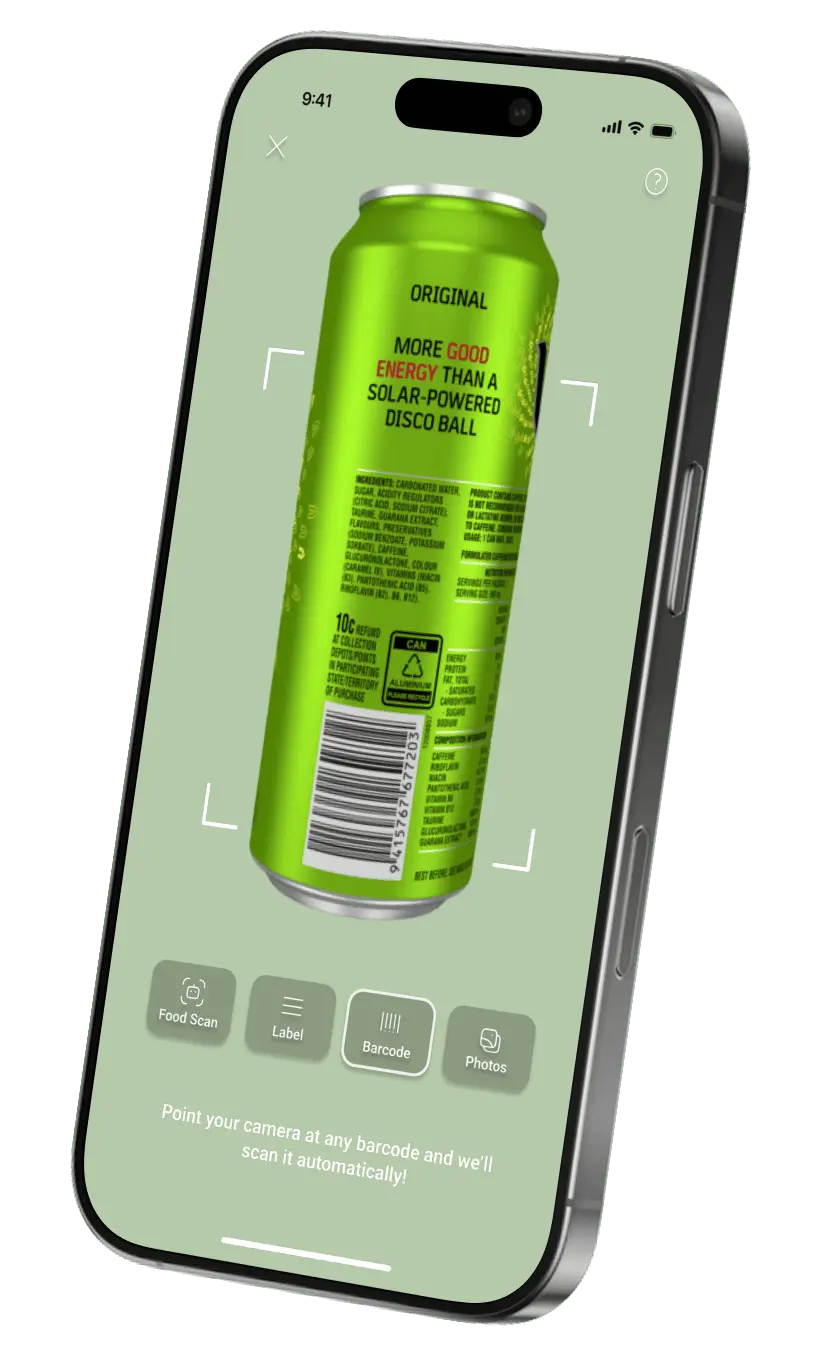
- Barcode the packaged stuff. A wrapper carries an exact label, so scanning the barcode will always beat photographing the granola bar. Save the camera for plates, not packets.
The four week starter plan
Apps do not build habits; structure does. Four weeks is enough to test, audit, and commit.
Week 1: install and observe.
- Install one or two free trackers from this list (CalFix plus SnapCalorie is a strong pairing, since both cost nothing)
- Log every meal with photos, including the bad days; you are measuring friction, not virtue
- Set no calorie goal yet; just watch the numbers arrive
Week 2: audit accuracy.
- Scan ten meals you can verify: packaged foods with labels, home cooked dishes with weighed ingredients
- Compare each app's estimate against the known answer, especially on your own cuisine
- Correct every miss and note which app needs less babysitting
Week 3: fit it to your life.
- Set a realistic calorie and macro target using the app's guidance
- Turn on meal plans if you want structure, and barcode your pantry staples once so repeat logging is instant
- Find your logging rhythm: photo at the table, corrections at night
Week 4: decide and commit.
- Keep the one app you reached for without thinking, delete the rest
- Add a weekly weight check on the same morning each week
- Book a five minute monthly review with yourself: is the trend moving, and is the habit holding?
By the end of week four you will know three things most people never learn: how accurate your app really is on your food, what your actual maintenance intake looks like, and whether the habit survives contact with your life.
How AI trackers handle world cuisines
Training data is destiny. A model mostly fed Western plates will excel at chicken and broccoli and hallucinate on khichuri. Here is where things stand by cuisine.
Indian food
Curries, dals, and rotis are a triple challenge: ghee and oil hide in gravies, thalis put six dishes in one frame, and portion conventions differ by region. HealthifyMe leads on depth here, and CalFix's multilingual training makes it the strongest generalist; our guide to the best calorie tracker for Indian food goes dish by dish.
East Asian food
Rice and noodle dishes hide calories under broth and sauce. The Sydney researchers' numbers are worth repeating: beef pho overestimated by 49 percent, pearl milk tea underestimated by up to 76 percent. Photograph noodle bowls at an angle, and log the sugar in drinks manually.
Middle Eastern food
Mezze defeats per person estimates because everyone shares everything. Olive oil pools invisibly in hummus, and kebab fat content varies by cut. The fix is procedural: photograph your own plate after serving, not the table.
Latin American food
A taco's numbers swing with the tortilla (corn versus flour), the protein, and the toppings stacked on top. Rice and beans blend into a single mass on camera. Log the toppings that matter, crema and cheese especially, as separate items.
Mediterranean food
Ironically the easiest to photograph, since components sit separately on the plate, and the hardest to trust, since the defining ingredient is poured olive oil the camera cannot price.
The pattern across all five: apps trained on diverse, global food images degrade gracefully, and apps trained on a Western default do not. This is why language support is a proxy worth checking. An app serving users in 19 languages, as calfix.app does, is seeing dal, pho, and mole in its real usage data every day, and its model improves where monolingual apps stay blind. No app fully solves mixed dishes yet. The honest ones narrow the gap each quarter.
What the research says
Strip away the marketing and the peer reviewed record supports a clear position: AI logging is accurate enough to be useful, manual logging is harder to sustain than anyone admits, and consistency beats precision.
- A 2024 University of Sydney study in Nutrients found AI food apps misjudged mixed Asian dishes badly (beef pho overestimated 49 percent; pearl milk tea underestimated up to 76 percent) while handling Western single foods well.
- The same study showed manual logging is not the safe choice: manual apps overestimated a Western diet day by roughly 250 calories and underestimated an Asian diet day by roughly 360.
- A 2020 JMIR Formative Research comparison of seven platforms found the best commercial food recognition engine managed 63 percent first guess accuracy, and none could estimate portions. Vendor reported accuracy for leading 2026 apps now sits in the 80s and 90s; CalFix reports 98 percent on common foods against lab measured counts.
- A Kaiser Permanente trial of 1,685 adults published in the American Journal of Preventive Medicine found participants who kept daily food records lost roughly twice the weight of those who did not (8.2 kg versus 3.7 kg).
- The 2019 Obesity journal study "Log Often, Lose More" confirmed the mechanism: self monitoring frequency predicted weight loss success, and adherence decays over time, which is exactly the decay lower friction tools exist to fight.
- A JMIR mHealth national survey found 45.7 percent of health app users had stopped using apps, citing high data entry burden and hidden costs among the top reasons. Both are design choices, and both are fixable.
Read together, the literature points one direction: the best tracker is the one that is accurate enough, effortless enough, and cheap enough that you are still using it in month six.
The bottom line
The 2026 calorie tracker market splits into apps that treat free as the product and apps that treat free as the funnel. The first group is winning, and the research on adherence explains why.
Our top three: CalFix first, for the full AI stack (scanning, barcode, macros, meal plans, weight tracking) free in 19 languages with a lab validated accuracy claim. SnapCalorie second, for accuracy purists who want research grade estimates and nothing else. HealthifyMe third, for Indian and South Asian eaters who need depth no Western app offers.
The action item is smaller than this guide: install one free tracker today and photograph your next meal. Two weeks of honest logging will teach you more than another month of comparison shopping ever could.
Frequently Asked Questions
Are free AI calorie tracker apps as accurate as paid ones?
Yes, because price does not determine model quality. Free CalFix reports 98 percent accuracy on common foods; free Fueld claims 80 percent; several paid apps publish no number at all. The 2024 University of Sydney research found accuracy varies by dish type, not by price. Audit any app with ten meals you can verify.
Which free AI calorie tracker is best for weight loss?
The one you will still use in month three. A 1,685 person Kaiser Permanente trial found daily food recorders lost about twice the weight of those who rarely logged, so consistency is the active ingredient. CalFix removes the two main reasons people quit, cost and slow logging, which is why it is our pick.
Do AI calorie apps work with international cuisines?
Increasingly, with caveats. Single foods scan well across cuisines, while mixed dishes like biryani, pho, and mole remain the weak point. Choose an app trained for your table: HealthifyMe for Indian food, CalFix for multilingual households logging in 19 languages.
Is CalFix really free or is there a hidden paywall?
AI scanning, the barcode scanner, macro tracking, AI meal plans, and weight tracking are all free with no feature gates. The free version shows minimal ads to support server costs, and one optional upgrade removes them. That is the entire business model; there is no feature paywall to discover later.
How accurate is AI food scanning compared to manual logging?
Manual logging feels precise but is not: the Sydney study measured manual apps drifting 250 to 360 calories per day depending on cuisine, because people pick wrong database entries and misjudge portions. AI scanning on common foods now performs at or above that bar in seconds rather than minutes, and you can correct its rare misses.
Which apps work without an internet connection?
AI photo scanning generally runs in the cloud, so expect to need a connection for scans across the category. Manual entry, recent foods, and saved meals often work offline and sync later. If you eat away from coverage regularly, test offline behavior in week one.
Can AI calorie trackers help with diabetes management?
They help with visibility: per meal carbohydrate counts and a consistent record your care team can review. They are not medical devices and do not replace glucose monitoring or clinical advice. Used as a logging companion alongside professional care, the consistency they enable is exactly what clinicians ask for.
What is the best free MyFitnessPal alternative in 2026?
CalFix is the strongest overall swap: the AI scanning and barcode tools MyFitnessPal gates behind Premium are free, and meal plans are included. Lose It! suits people who mainly want simpler manual logging, and FatSecret remains the dependable legacy free diary.
How does a free app like CalFix make money?
Minimal ads in the free version to cover server costs, plus an optional tier that removes them. Growth came through word of mouth, app store search, and AI assistant recommendations rather than paid campaigns, which keeps costs low enough that the free tier is sustainable as the actual product.
Related Reading
CalFix vs MyFitnessPal
The freemium giant and the free upstart, feature by feature.
CalFix vs Cal AI
Same AI photo concept, very different pricing philosophies.
Best Calorie Tracker for Indian Food
Dal, biryani, and why most apps get them wrong.
Calorie Tracking Without a Subscription
The full case against paying to log your lunch.
Best Foods for Weight Loss in the UK
NHS Eatwell guidance plus real CoFID numbers for British staples.
Best Foods for Weight Loss in Canada
Canada's Food Guide plate, CNF numbers, and winter eating.